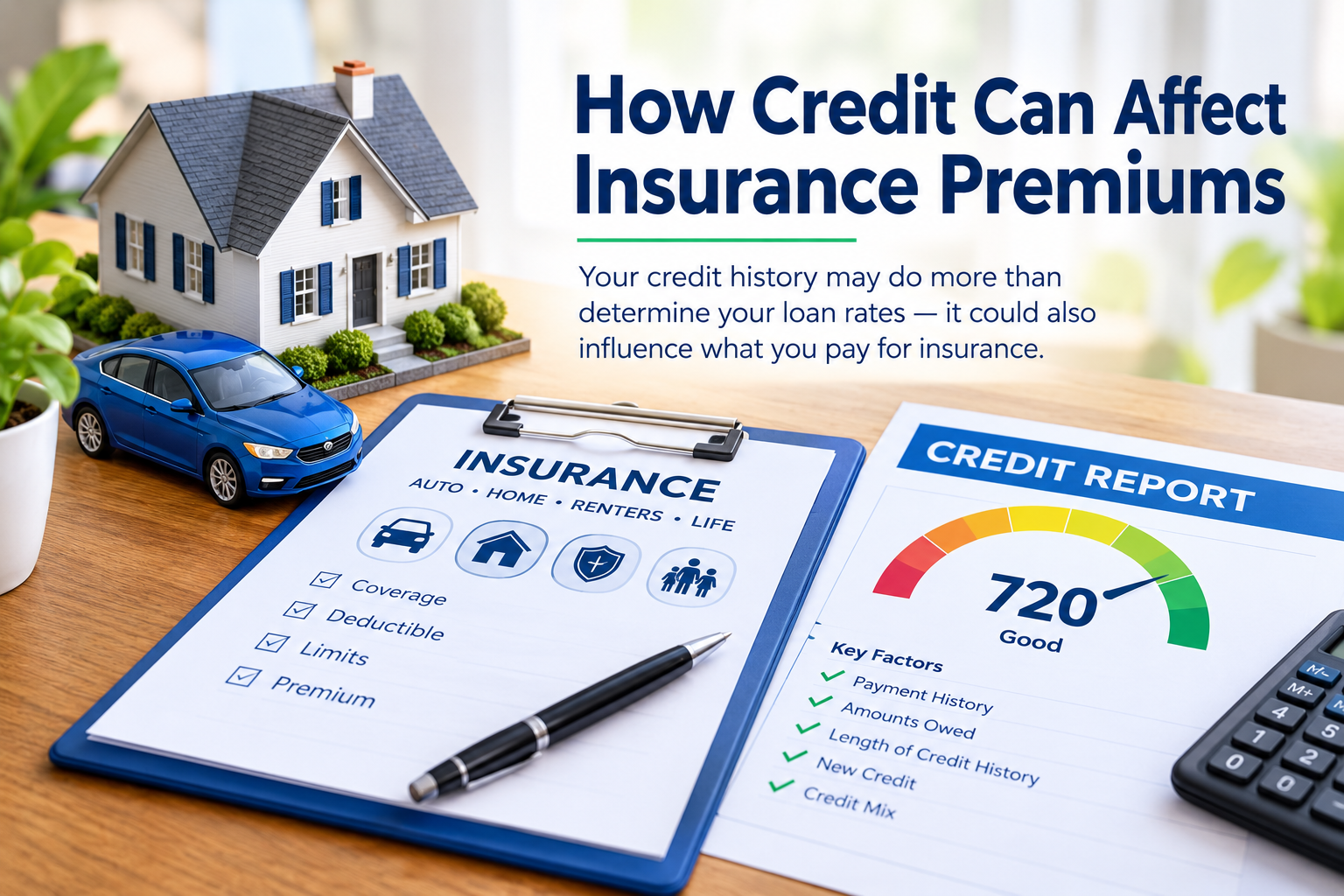
This is an important topic that needs a little explanation because credit does not affect insurance costs the same way it affects loan rates. The rules can vary by state and type of insurance. Some insurers use information from a consumer’s credit history to create what’s commonly called a credit-based insurance score. It is different from the traditional credit score you see when checking your FICO or VantageScore.
Your credit history can affect more than your ability to borrow money. In some states and for certain types of insurance, insurers may use credit-related information as one factor in determining whether to offer coverage or how much you pay. Understanding what information may be used and checking it for errors before and after shopping for insurance can help you avoid paying more than necessary.
The Consumer Financial Protection Bureau (CFPB) and Federal Trade Commission (FTC) confirm that insurance companies may use consumer reports and risk scores in insurance-related decisions. Consumers should know that while credit is important, it isn’t the only factor.
Your credit score isn't necessarily your insurance score.
An insurer may use a different scoring model and may combine credit information with other factors such as claims history, driving history, location, coverage, deductible, and other underwriting factors. So how can credit affect what you pay?
Imagine two homeowners with similar houses, coverage and claims histories. One has a strong credit history; the other has significant negative credit information. If the insurer uses credit information in its underwriting or rating process, the consumer with the stronger credit profile may receive a lower premium, while the consumer with weaker credit may pay more.
The exact impact varies considerably by insurer and state. This is why improving credit can potentially produce savings beyond mortgages, credit cards and auto loans.
What types of insurance can be affected
Homeowners insurance
Credit information can be one factor insurers use when determining eligibility or pricing.
For example, New York’s Department of Financial Services says insurers may use consumer credit information in deciding whether to issue a homeowners policy and how to price it, subject to New York and federal requirements. Homeowners insurance rates can be impacted by:
- Location
- Replacement cost
- Age and condition of home
- Roof
- Claims history
- Coverage limits
- Deductible
- Property characteristics
- Protective devices
- Credit-related information where permitted
This leads to an important consumer lesson: Improving your credit may help, but it doesn’t guarantee a lower premium.
Auto insurance
Some insurers use credit-related information as part of their auto insurance rating process. The rules and permitted practices vary by state. It is important to know that auto insurance companies do not only rely on your driving record, expected driving activity, vehicle information and your address to determine your premiums.
And importantly, your driving record is not the same thing as your credit history. An excellent driver can have poor credit, and vice versa. Auto insurance companies can consider:
- Driving record
- Accidents
- Claims
- Vehicle
- Mileage
- Location
- Coverage limits
- Deductible
- Driver characteristics
- Insurance history
- Other underwriting factors
- Potentially credit-related information where permitted
Renters insurance
Credit-related information may also be considered in some insurance markets, although other factors can be much more important.
Life insurance
Life Insurance companies can use various types of consumer reports and specialty reports for some insurance decisions. Don’t think of it simply as “your credit score determines your life-insurance premium.” Try to understand the specific concerns of insurance companies and how they actually perceive people with bad credit. The CFPB notes that specialty consumer-reporting companies provide information used in insurance decisions across several categories.
Good credit has its benefits
Think of it from a bank or insurance companies point of view. They are taking a risk issuing an insurance policy that may legally obligate them to pay in the event of a claim. People with bad credit or large debt burdens may be more vulnerable due to being in a financially comprising position. When faced with desperate situations, people may be tempted to make poor choices, such as filing a fake or illegal insurance claim in an effort to collect insurance money.

The FTC notes that some insurers use credit-report information to help determine whether to provide insurance and what premium to charge, and refers to these as “insurance scores” or “credit-based insurance scores.”
Like it or not, the reality is that people who are more financially stable, have good credit and good standing in others areas under review are perceived to be less likely to file bogus insurance claims. As we mentioned, credit is not the only factor considered, it certainly helps your wallet when it comes to premiums.
Things NOT to Do
Consumers can make expensive and costly mistakes while trying to improve their situation.
Don’t:
- Don’t assume a low credit score automatically means higher insurance.
- The rules and underwriting practices differ.
- Don’t open several new credit accounts just before shopping for insurance.
- That can create unnecessary changes to your credit profile.
- Don’t carry credit-card debt just because you think it helps your score.
- Carrying a balance isn’t required to establish good credit.
- Don’t ignore errors because you think they’re too small to matter.
- An inaccurate account, late payment, balance, or collection could potentially affect decisions based on consumer-report information.
- Don’t accept the first insurance quote.
- Comparison shopping can be valuable.
- Don’t automatically choose the cheapest policy.
- Coverage matters.
- Don’t throw away an adverse-action notice.
- It may contain important information about the consumer report used and your rights.
Practical money-saving tips
Your credit can affect more than your ability to qualify for loans and credit cards—it may also play a role in what you pay for certain types of insurance. While credit is only one of many factors insurers may consider, maintaining accurate credit reports and healthy credit habits can put you in a better position when shopping for coverage.
Before applying for insurance, check your credit reports, correct any errors, compare quotes from multiple insurers, and ask how credit information may be used. After purchasing a policy, continue to monitor your credit and periodically review your insurance costs. Taking these simple steps can help you make informed decisions and potentially save money over time.